 Ripe Planner

If you've ever typed a recipe idea into a generic SEO tool and gotten back a pile of e-commerce keywords, you already know the frustration. A search for "cookies" shouldn't return retail listings and tech jargon about browser cookies. Food bloggers need a tool that understands the difference between a home cook and a retail shopper, and that's the gap Ripe was built to close.
Generic SEO Tools Weren't Made for Recipes
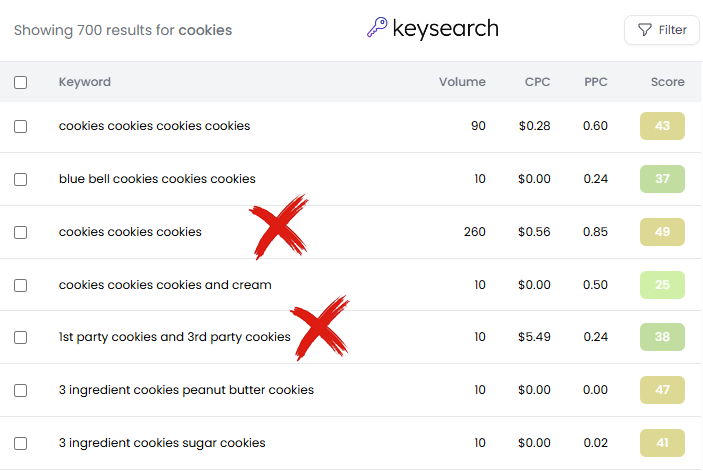
Most keyword tools treat every website the same way. A dessert blog gets scored with the same logic as an e-commerce store or a tech site, which means the keyword suggestions are often irrelevant. Search "cookies" in a standard tool and you'll see transactional phrases mixed in with unrelated tech terms, none of which help a food publisher plan content.
Ripe runs on transparent, rule-based logic instead. There are no black-box scores handed to you without explanation. Ripe filters out retail noise and surfaces ideas that are strictly recipes people actually want to cook. Learn more about recipe blog keyword research.
Finding Real Recipe Concepts
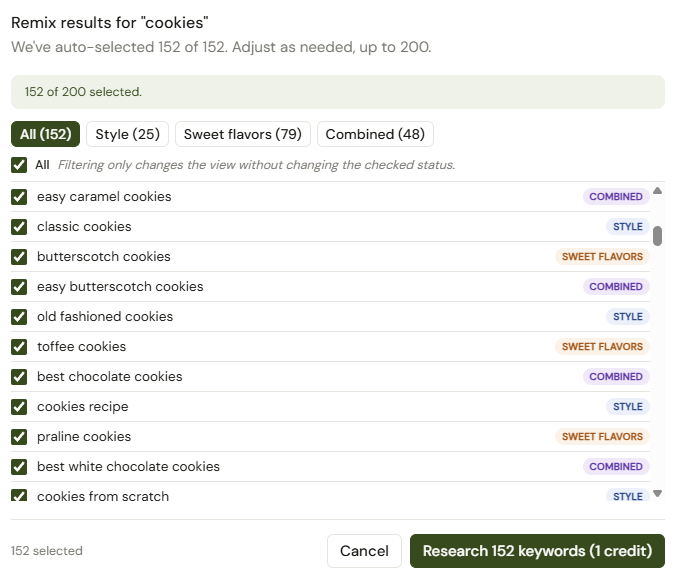
Search "cookies" in Ripe and you'll get a real recipe concept list, full of flavor and process combinations people search for while standing in their kitchen ready to bake. From there you can sort the results by volume, pick the concept you want to develop, and add it to your library.
The Four Factors Behind Ripe's Rubric Score
Once a keyword is in your library, Ripe autofills (Novice+) the supporting data and runs it through a custom rubric. That score is built from four factors.
- Search volume
- Difficulty
- SERP data
- Timing
Together these tell you whether a keyword is genuinely rankable for your site's current size and authority, based on the website details you set in your account. See a full breakdown in our docs.
Why You'll Sometimes See a Dashed Score
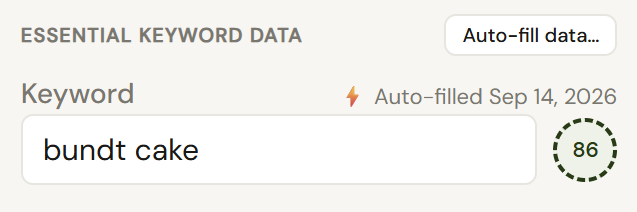
When you first pull a keyword into Ripe, the SERP comparison and rubric score may appear dashed rather than solid. That's Ripe telling you the score is still an estimate. The most likely reason for a dashed score is the SERP comparison verdict.
You have two ways to solve this.
- Review the top search results yourself and set a manual score against your site
- Run an auto check (Pro+) so Ripe pulls the search results, compares backlinks and domain authority, and returns a verdict
Once that piece is filled in, both the SERP comparison and the rubric score turn solid.
Adjusting the Rubric for a Newer Blog
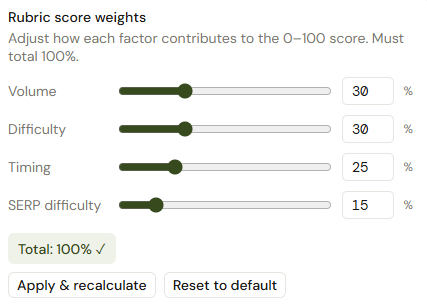
Live SERP difficulty can be tough on a newer site with less search history. If you'd rather it not weigh down your scores, open your settings and the rubric weighting panel (pictured above). You can set SERP difficulty to zero and redistribute the remaining weight across the other three factors so everything still totals 100. Apply the change and recalculate, and your keywords will show a solid score without SERP data factored in. Step-by-step instructions are in our docs.
Timing Your Content With the Due Date Filter
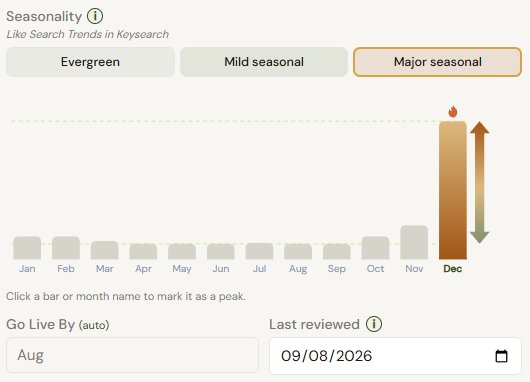
Ranking is only half the problem. Every keyword in Ripe also shows its peak search months. A keyword with a strong December peak gets flagged as major seasonal, which comes with a default four month lead time, meaning that recipe should go live in August to catch the peak. If your blog performs well with a shorter lead time, you can adjust your defaults in settings, for example switching major seasonal to a three month lead. Learn more about seasonal planning.
Planning Your Calendar by Due Date
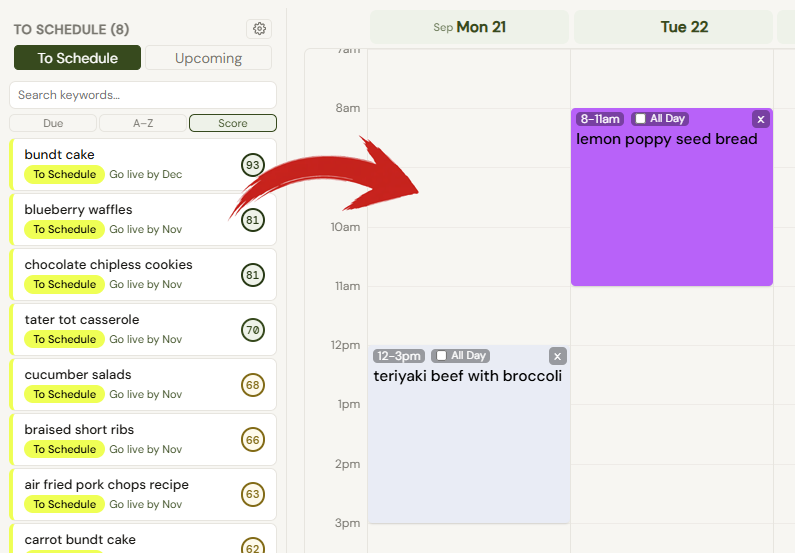
The recipe planner pulls together every keyword you've marked to schedule, sorted by due date based on whether it's evergreen, mildly seasonal, or major seasonal. The scheduling math is already done for you. You can also sort by score to surface your highest opportunity keywords and check which ones still have enough lead time before their peak. When you find the right fit, drag it onto your calendar.
Get Started
Ripe is in beta, and early adopters who add 100 keywords to their library during this period lock in one free month once the product goes live. If you're ready to stop sorting through irrelevant keywords and start planning recipe content with real timing data behind it, create your account and start building your keyword library today.
See also Finding What's Missing: A Walkthrough of RIPE's New Content Gaps Feature