 Ripe Planner
I spent six years photographing food before I ever conceived of building software to help me with it. The biggest lesson I learned in those years is that nobody pays you for a recipe that's ready two weeks after season. 😭
A Thanksgiving side dish shot in August has a very short shelf life once November hits. If that window is missed, the recipe either becomes obsolete this year or gets put on the back burner (no pun intended) for the following year. Saving it for a future release date comes with its own issues. Like maybe interest in your specific recipe won't be as great next year. Or maybe your shooting style will have changed and it'll no longer match your brand.
When you start developing recipes on your own timeline instead of your client's (like selling on spec), you're no longer just managing quality. You're managing timing.
Work backward from the go-live date
Some people plan recipes the same way they plan hobbies. Inspiration strikes, they get pumped to work on it, and they test it the next weekend. That's great for evergreen recipes, but what happens when you have six recipes in the works, all with different peak search months, and no system for tracking which one needs your attention right now?
Flip the order. When inspiration strikes, note the peak search month(s). Then count backward far enough to include the editing, the photoshoot, the testing, grocery shopping, writing, and research. Wherever that leads you, add another couple of weeks for unforeseen obstacles.
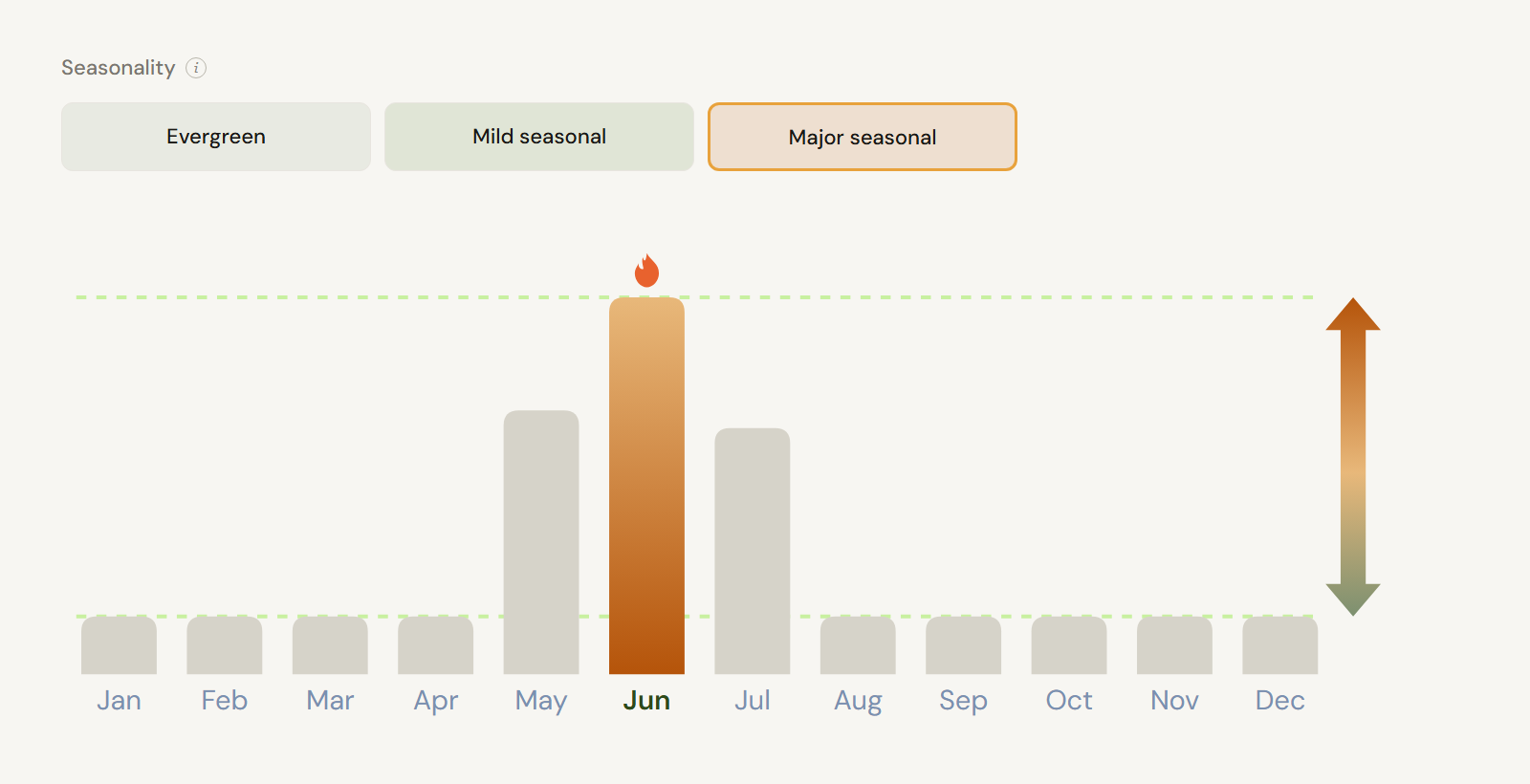
But don't stop there. Every recipe has a different intensity of seasonality. A Thanksgiving recipe with a strong seasonal spike needs more lead time than one that's searched for year round (like weeknight dinners). Giving search engines enough runway to find and index your recipe before everyone is searching for Thanksgiving recipes is just smart. Meanwhile, a Mardi Gras recipe, while it has a spike search, isn't as massive as Thanksgiving. Some runway is good but you won't need as much lead time as Thanksgiving recipes.
Since each food blogger has their own preference for how early a recipe should be posted before its peak season, Ripe allows you to customize lead times. Do you prefer a three month lead time on very seasonal recipes or four months? If a food blogger needs four months, then the recipe developer selling to that blogger might need five months. This gives the blogger time to post within the ideal Go Live window after purchasing your recipe. Set your custom lead time and Ripe will take care of the scheduling calculations.
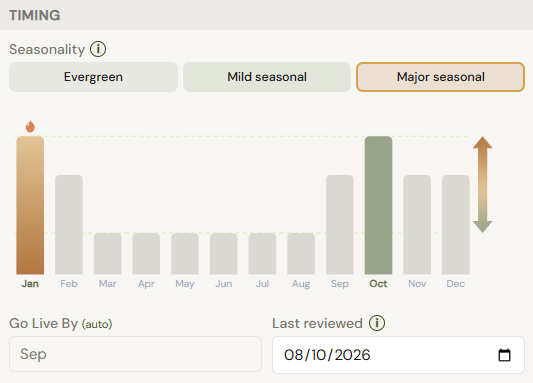
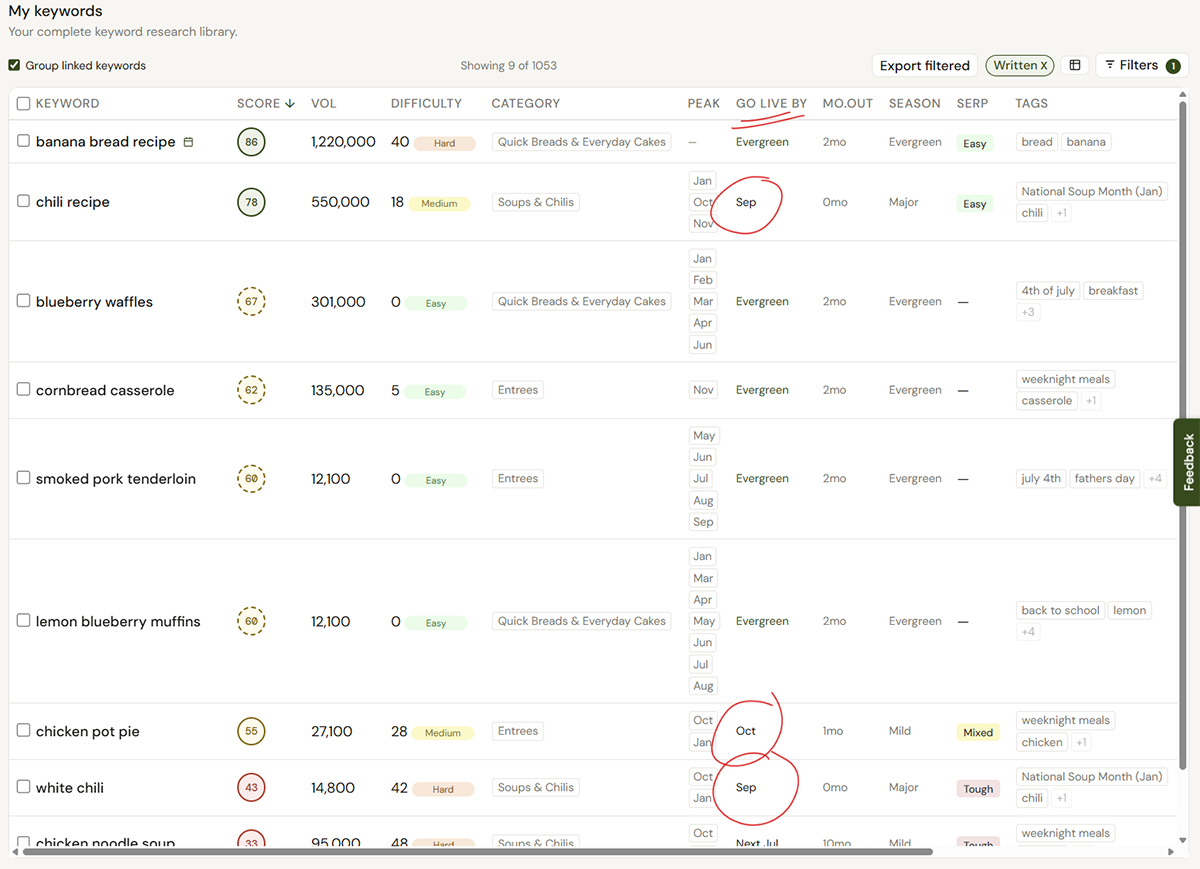
This precise yet variable math is one of the leading reasons I built Ripe. Some keywords have one peak month, some have six. For those that have six, the window of ideal Go Live By dates multiplies too. Ripe calculates based on today which keywords should go live soon. For a keyword with six peak search months, that Go Live By recommendation will adjust to the next due date from today.
[In the example pictured, if today is August, the next Go Live By date is Sept for the January peak. That's a four month lead time since it has a major seasonal spike.]
Track status like a production line
Believe me when I say my life runs on checklists. I've got Google notes (with reminders!), sticky notes (both paper and digital), and actual word docs with lists and lists. Oy. A flat checklist tells you what's left, but it doesn't point to your bottleneck. When I started building Ripe, fixing this chaos was very early on my...checklist. :-)
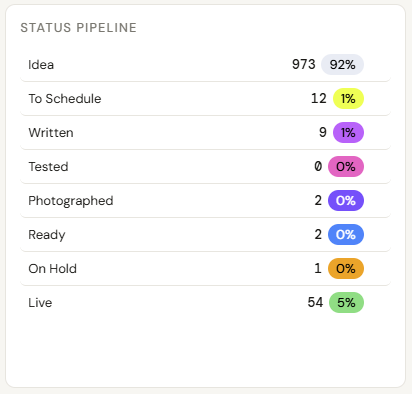
When each recipe has a status (idea, written, tested, photographed, ready, live), the value isn't in the labels themselves per se. It's in being able to scan the list as a whole for patterns that jump out. Nine written recipes and two photographed recipes means your pipeline is full at the front and empty at the back. No amount of new ideas fixes that. Your focus should shift toward testing and photographing to keep things moving.
Protect the major dates, let the minor ones slide
Not every recipe carries the same risk if it gets lost in the pipeline. A weeknight dinner idea missing its date by a week barely hurts. A major holiday recipe missing its date by a week could become a wasted year of work, since you don't get another shot at that recipe until the following year.
Instead of sorting your pipeline in chronological order, try sorting by time-sensitivity. When something has to give (and something always does), let the low-stakes evergreen recipe slide. Protect the ones tied to a solid date and get back to the evergreen ones when you can.
Build the list before you need it
The recipes that need the most time to develop well are somehow always the ones you start thinking about too late. If a big seasonal push is only a few weeks away when the idea first hits you, you're already behind.
Instead, add new recipe ideas to a running list tracked by season so that even if it's nowhere near time to start working on them, they'll be there when the time is right. Ripe will remind you of all the ideas you have for the upcoming season. So now you're pulling from a full list rather than staring at a blank page or rushing to hit a deadline for next week.
The recipes that turn out the best and feel easier are typically the ones you don't have to rush. By tracking the date months before deadline, you won't find yourself with a blank slate right when the ideal window opens up for a big season.