 Ripe Planner
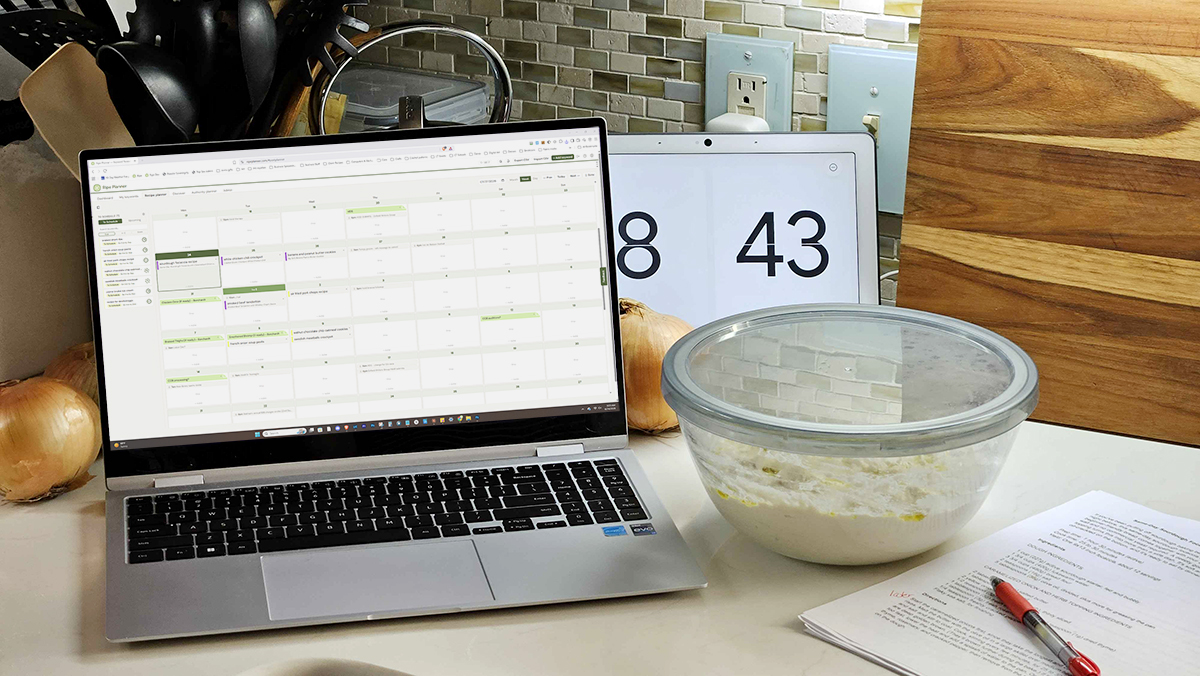
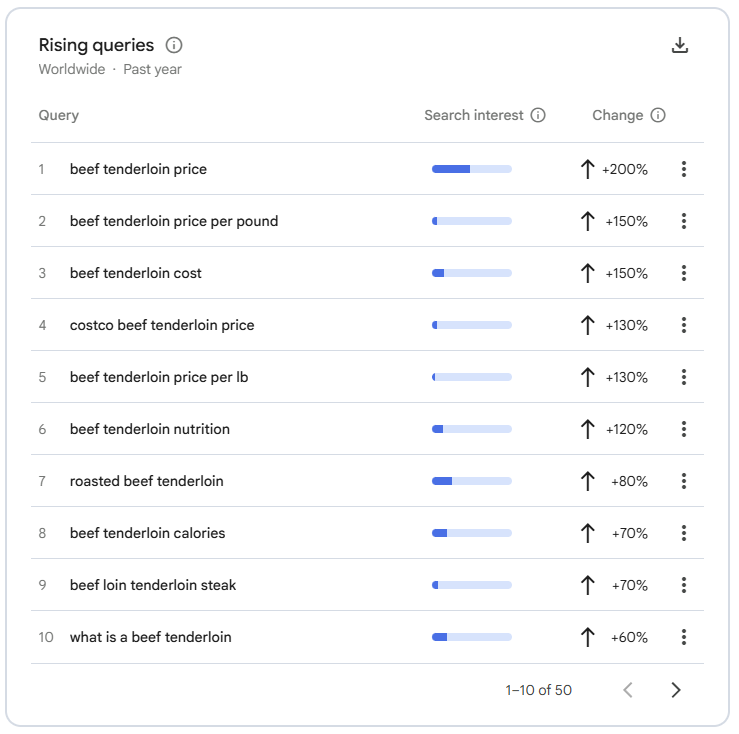
When I type "beef tenderloin" into most keyword research tools, I get everything from "beef recipes" to "omaha steaks beef tenderloin", a transactional intent keyword. Type it into Google Trends and the offerings are more about acquiring beef tenderloin than figuring out what kind of recipe users might enjoy making with it. I often find myself thinking, "[sigh] That's not what I meant." When determining what recipe to develop next, I want my keyword research tool to understand what constitutes a recipe versus an informational search on the food item itself.
Most keyword tools are built for the whole wide world of internet. E-commerce, SaaS, and local service businesses. Food blogging is unique in that it revolves around flavors and cooking method concepts more than products. In my 30 years in business and over 8 years in recipe development, I have never found a keyword research tool that truly understood my recipe keyword needs. Don't we deserve a dedicated tool just like all the e-commerce, healthcare, and real estate businesses?
Let's break this down by looking at keyword research approaches first.
Instead of high volume, try "how would a real person type this?"
Most tools deliver broad terms with massive search volume. Search volume is important. So I get it. But "beef tenderloin" alone is going to be very hard to rank for when your blog is up against powerhouses like Food Network. And there's no need to. There are other ways to win.
We've all heard about long tail keywords. Now how do you find longtail keywords for something like beef tenderloin without shifting into questions like "What temperature should beef tenderloin be cooked to for medium-rare?"
The trick is finding specific, weird phrases real people use when they're staring into their freezer wondering which meat to thaw and how to prepare it in 30 minutes or less because they won't get home from soccer practice until 6:30 PM and their spouse will get home at 7:15 PM and the dog will need to be walked and their favorite show (that the whole family loves *shock*) starts at 8:00 PM and everybody will be hungry.
When you're planning dinner, how do you search for ideas? For me, I think like this:
- Method + ingredient. "Air fryer chicken thighs," "instant pot chicken and rice," "sheet pan chicken fajitas," "easy a** pork chops." (Just kidding...Google ignores that word)
- Ingredient + diet modifier. "Low carb chicken casserole," "gluten free chicken parm," "dairy free chicken alfredo."
- Ingredient + occasion. "Chicken for Easter dinner," "chicken appetizers for game day."
- Ingredient + constraint. "Chicken recipes for picky eaters," (there's at least one in every family) "5 ingredient chicken dinner," "chicken recipes using pantry staples."
Those don't always show up as having strong keyword potential in generic tools. But there are real people out there searching for them using exactly those words and real recipes appear in the search results. Yours could be one of them.
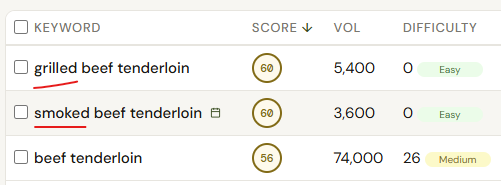
I recommend you start by finding keywords that use that kind of layering so that the competition eases up. Not "beef tenderloin" but "grilled beef tenderloin" or "smoked beef tenderloin" (method + ingredient). More specific. Still good search volume with much lower competition.
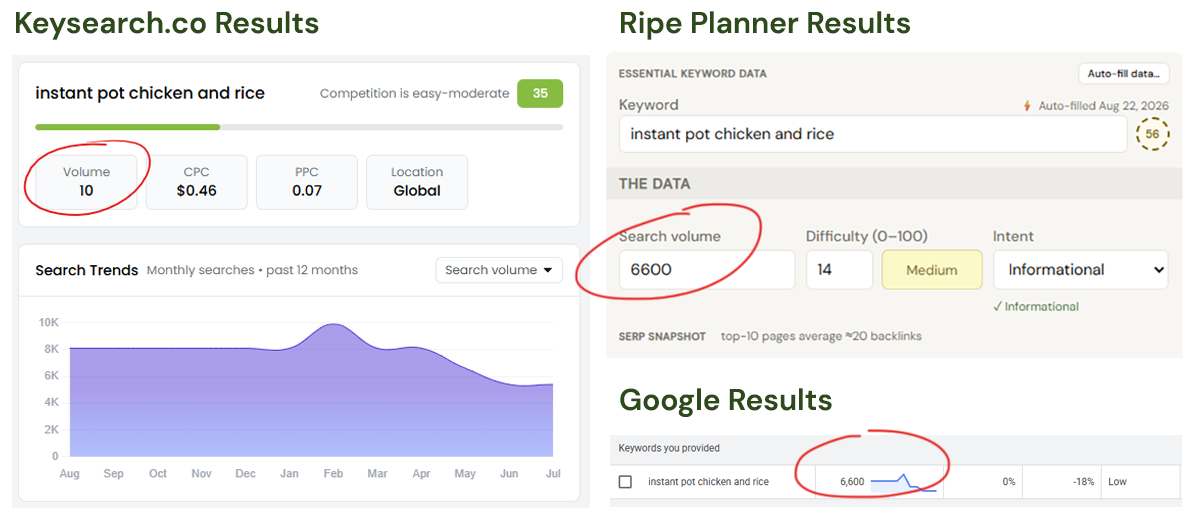
As a side note, it's good to know that different keyword tools pull from different database sources. Find a tool you like and stick with it for more accurate keyword-to-keyword comparisons.
Sort your searches into categories to cater to the specific audience
Every food search fits roughly into one of these categories, and knowing which one you're writing for changes how you create the post.
Quick weeknight. Someone has 25 minutes and low patience. They want the ingredient list up top and zero backstory about your grandmother's garden.
Occasion or holiday. They're planning ahead. They want photos that make the dish look impressive and they're fine reading a longer post because they're not in a hurry yet.
Dietary restriction. They need to know immediately if this works for them. Lead with it. Don't bury "gluten free" in paragraph four.
Method driven. They already own the air fryer or the instant pot and they're building a whole library of things to make in it. These people binge content. Give them a next recipe to click.
Confusing these is how you end up with a "quick weeknight dinner" post that opens with six paragraphs of narrative. Match the post to the category the search came from. Ripe Planner is built to organize keywords by categories and tags for this reason (and more!)
Build a running list, not a one time dump
Early on, I made the mistake of waiting until I was ready to plan a recipe to begin researching it. I'd sit down and open my keyword research tool, stare at the blank input box for a while until something like "chocolate cookies?" came into my mind. The results would be...less than ideal and I'd scour the "similar results" list for something with lower competition.
Once I found a winner, like "double chocolate chunk cookies," my excitement would deflate because the peak search is in January but it's currently March. Booooo! I'd move on until I found something that maybe fit the current season. -ish. And that keyword which would be perfect to develop in November would be lost to the internet gods.
When I learned to treat keyword research as a project instead of an ongoing habit, everything got easier. I'd research keywords when motivation struck and store them in my very impressive-if I may say so myself-spreadsheet. (Who doesn't love a good spreadsheet?) If a Pinterest trend caught my eye, I'd look into variations of that keyword. If I spotted a drool-worthy recipe in a magazine, I'd test out a few different possible keywords that might lead a reader to something similar. All of those details would go in my list right when they came to me, not whenever there was finally time to sit down and "do keyword research" as a chore.
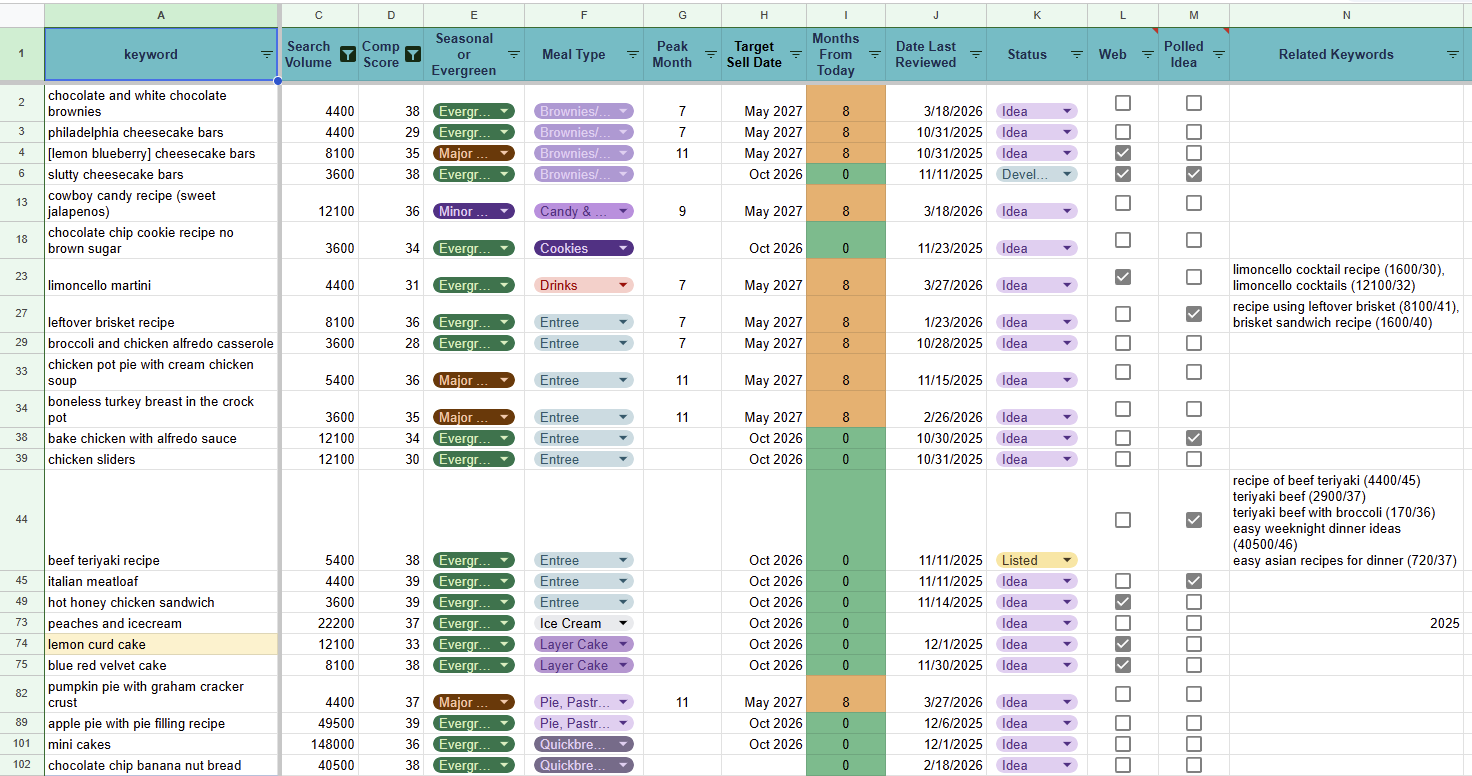
After a while, that running list started showing me things I wasn't expecting. Patterns. I'd find I had twelve cookie keywords and zero bar recipe keywords. I'd realize the majority of my entree keywords were for chicken and beef. I'd learn that I had three nearly duplicate versions of "apple pie" that weren't helping me find more recipes to develop, but they were showing me the accumulation of keywords that might help one recipe rank.
Unfortunately, there were severe limitations to my spreadsheet too. I couldn't track (and sort) easily by more than one peak search month. I had to pick the one best, which limited my recipe development window. And grouping near-duplicate keywords together was clunky, to say the least. Filtering by category and sorting by competition score first, volume second still left a long list of keywords to browse in order to figure out "what's next?"
An easier solution
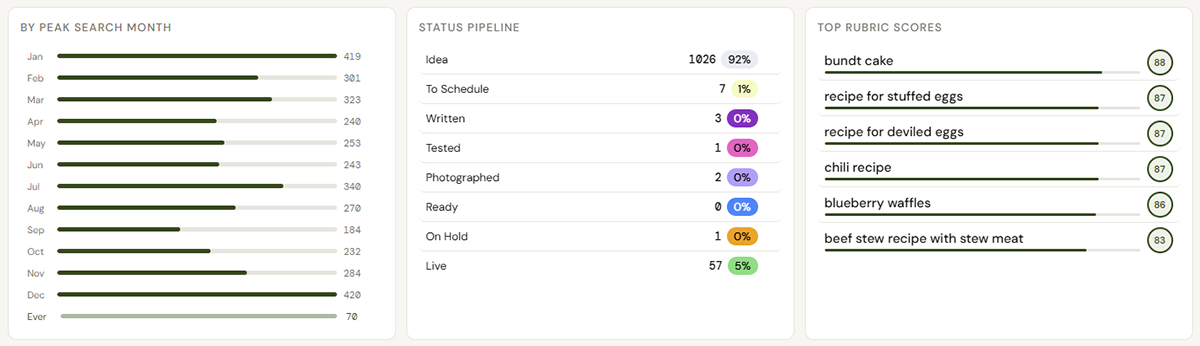
I built Ripe because I got tired of managing this in spreadsheets and sticky notes that just couldn't handle all the data I wanted them to (like specific seasonality and multiple peak search months). I built Ripe to organize my short and longtail keywords, link near-duplicates but give each their own record, store as many peak search months as a keyword has, and plan my next recipe by due date and a custom rubric scoring system. It has...changed my life.
When I started this project, I thought it would just be mine. My little secret that gave me a leg up on my competitors. But I just can't sit on this any longer. It's too good. If you want a place to keep and organize your running list, research and discover recipe-related keywords, and schedule the best keywords for right now, this is the tool for you.